Afbeelding 1 van 6



Galerij
Afbeelding 1 van 6



Hebt u iets om te verkopen?
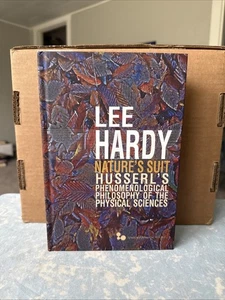
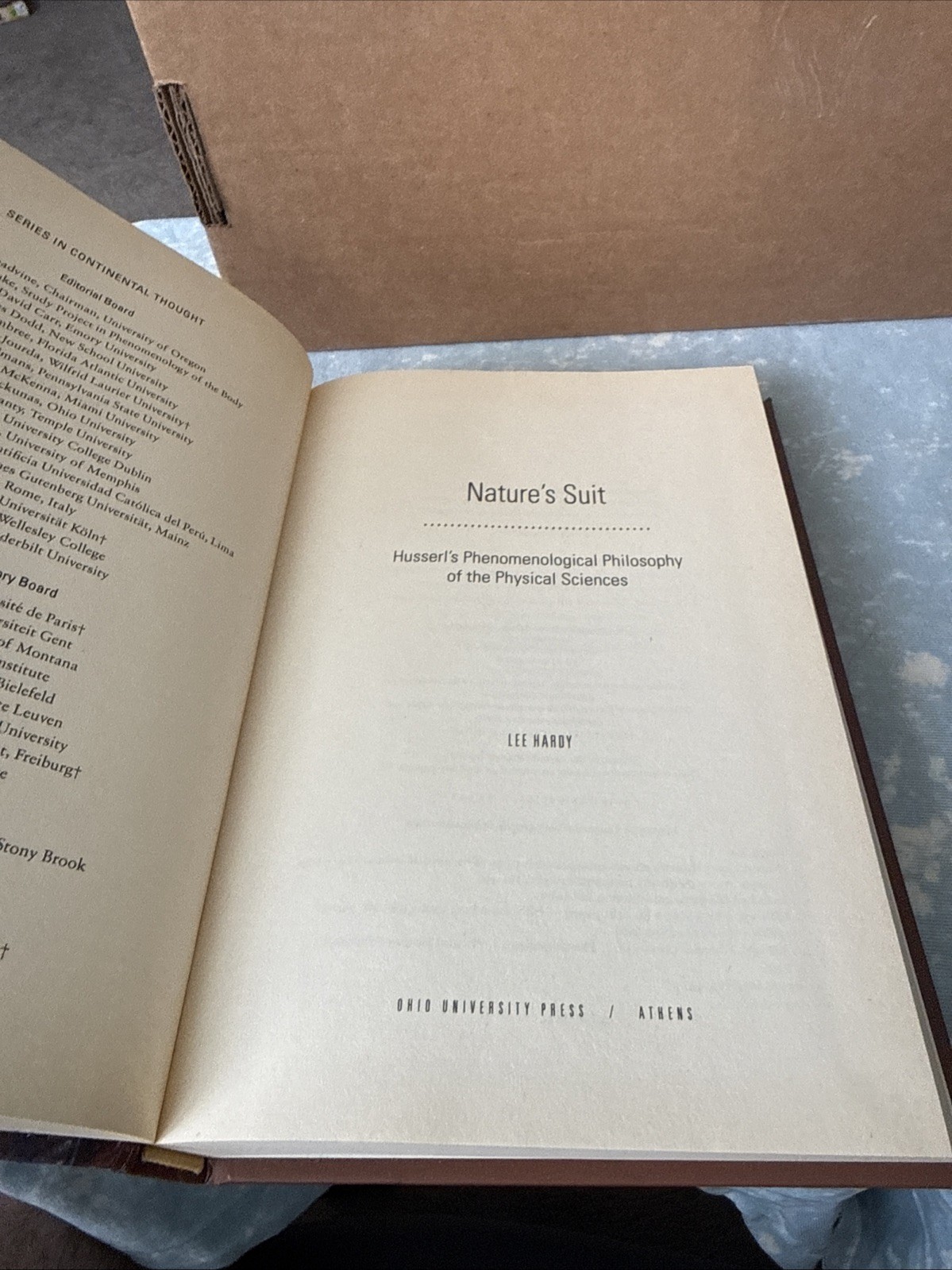
Nature′s Suit – Husserl′s Phenomenologic
US $50,00of Beste voorstel
OngeveerEUR 42,89
Objectstaat:
- Nu kopenNature′s Suit – Husserl′s Phenomenological Philosophy of the Physical Sciences
Oops! Looks like we're having trouble connecting to our server.
Refresh your browser window to try again.
Verzending, retourzendingen en betalingen
Verzendkosten:
US $5,22 (ongeveer EUR 4,48) USPS Media MailTM.
Bevindt zich in: West Lafayette, Indiana, Verenigde Staten
Levering:
Geschatte levering tussen do, 4 jun en ma, 8 jun tot 94104
Retourbeleid:
14 dagen om te retourneren. Verkoper betaalt voor retourzending.
Betalingen:
Winkel met vertrouwen
Over dit object
De verkoper neemt de volledige verantwoordelijkheid voor deze aanbieding.
eBay-objectnummer:398010974696
Specificaties
- Objectstaat
- ISBN
- 9780821420652
- Land van herkomst
- Verenigde Staten
Over dit product
Product Identifiers
Publisher
Ohio University Press
ISBN-10
0821420658
ISBN-13
9780821420652
eBay Product ID (ePID)
166438026
Product Key Features
Number of Pages
272 Pages
Publication Name
Nature's Suit : Husserl's Phenomenological Philosophy of the Physical Sciences
Language
English
Publication Year
2014
Subject
Movements / General, Movements / Phenomenology, General
Type
Textbook
Subject Area
Philosophy, Science
Series
Series in Continental Thought Ser.
Format
Hardcover
Dimensions
Item Height
1.1 in
Item Weight
19.5 Oz
Item Length
9.3 in
Item Width
6.3 in
Additional Product Features
Intended Audience
Scholarly & Professional
Reviews
Lee Hardy's study of Husserl is an outstanding achievement. The argumentation is crisp and clear throughout, and the discussion of primary and secondary texts is lucid and detailed. Above all, he makes a very good case for an important point that is highly relevant to the current resurgence of interest in phenomenology. Against the tendency of many other interpretations, he shows how Husserl's phenomenology is in principle compatible with a realistic understanding of modern scientific theories., "Lee Hardy's study of Husserl is an outstanding achievement. The argumentation is crisp and clear throughout, and the discussion of primary and secondary texts is lucid and detailed. Above all, he makes a very good case for an important point that is highly relevant to the current resurgence of interest in phenomenology. Against the tendency of many other interpretations, he shows how Husserl's phenomenology is in principle compatible with a realistic understanding of modern scientific theories."--Karl Ameriks, McMahon-Hank Professor of Philosophy, University of Notre Dame
Dewey Edition
23
Series Volume Number
45
Dewey Decimal
193
Table Of Content
Acknowledgments Abbreviations Introduction 1. Husserl: Realist or Instrumentalist? 2. Laws and Theories 3. The Plan of This Study Part One: Husserl's Phenomenological Philosophy of Science 1: The Idea of Science in Husserl and the Tradition 1. The Classical Idea of Science 2. The Idea of Science in Husserl's Phenomenology 3. The Problem of Empirical Science: Locke 4. The Problem of Empirical Science: Husserl 5. The Unity of the Empirical Sciences 6. Explanation in the Empirical Sciences 7. The Laws of Empirical Science 8. Empirical Science as Science 9. The Idealization of the Idea of Science 10. Summary 2: Husserl's Phenomenology and the Foundations of Science 1. Pure Logic as a Wissenschaftslehre 2. Regional Ontology 3. Transcendental Consciousness as the Ground of the Sciences 4. Phenomenology as the All-Embracing Foundational Science Part Two: Evidence and the Positing of Existence in Husserl's Phenomenology 3: Truth, Evidence, and Existence in Husserl's Phenomenology 1. Knowledge, Evidence, and Truth 2. Evidence as an Ideal Possibility 3. The Fallibility of Occurrent Cases of Evidence 4. Evidence and Justification 5. The Rational Indubitability of the Principle of Evidence 6. Summary and Transition 4: Evidence, Rationality, and Existence in Husserl's Phenomenology 1. Husserl's Theory of Rationality: Ideas I 2. The Strong Formulation and Philosophical Rationality 3. Rationality in Nontheoretical Contexts 4. Positive Scientific Rationality Part Three: The Problem of Theoretical Existence in Husserl's Philosophy of the Physical Sciences 5: Physical Things, Idealized Objects, and Theoretical Entities 1. The Physical Thing 2. Geometry and the Physical Thing 3. Geometry and Physical Science 6: Consciousness, Perception, and Existence 1. Perceptions and Existence 2. Consciousness and Existence 3. The "Existence-Independence" of Intentional Relations 4. The Ontological Status of the Noema 5. Summary Conclusion 1. Husserl's "Dogmatism" 2. The "Ambiguity" of Husserl's Philosophy of Science 3. Husserl's "Instrumentalism" 4. Husserl's "Provisional Instrumentalism" 5. Summary and Prospect Notes Bibliography Index
Synopsis
Edmund Husserl, founder of the phenomenological movement, is usually read as an idealist in his metaphysics and an instrumentalist in his philosophy of science. In Nature's Suit , Lee Hardy argues that both views represent a serious misreading of Husserl's texts. Drawing upon the full range of Husserl's major published works together with material from Husserl's unpublished manuscripts, Hardy develops a consistent interpretation of Husserl's conception of logic as a theory of science, his phenomenological account of truth and rationality, his ontology of the physical thing and mathematical objectivity, his account of the process of idealization in the physical sciences, and his approach to the phenomenological clarification and critique of scientific knowledge. Offering a jargon-free explanation of the basic principles of Husserl's phenomenology, Nature's Suit provides an excellent introduction to the philosophy of Edmund Husserl as well as a focused examination of his potential contributions to the philosophy of science. While the majority of research on Husserl's philosophy of the sciences focuses on the critique of science in his late work, The Crisis of European Sciences , Lee Hardy covers the entire breadth of Husserl's reflections on science in a systematic fashion, contextualizing Husserl's phenomenological critique to demonstrate that it is entirely compatible with the theoretical dimensions of contemporary science., Edmund Husserl, founder of the phenomenological movement, is usually read as an idealist in his metaphysics and an instrumentalist in his philosophy of science. In Nature's Suit, Lee Hardy argues that both views represent a serious misreading of Husserl's texts. Drawing upon the full range of Husserl's major published works together with material from Husserl's unpublished manuscripts, Hardy develops a consistent interpretation of Husserl's conception of logic as a theory of science, his phenomenological account of truth and rationality, his ontology of the physical thing and mathematical objectivity, his account of the process of idealization in the physical sciences, and his approach to the phenomenological clarification and critique of scientific knowledge. Offering a jargon-free explanation of the basic principles of Husserl's phenomenology, Nature's Suit provides an excellent introduction to the philosophy of Edmund Husserl as well as a focused examination of his potential contributions to the philosophy of science. While the majority of research on Husserl's philosophy of the sciences focuses on the critique of science in his late work, The Crisis of European Sciences , Lee Hardy covers the entire breadth of Husserl's reflections on science in a systematic fashion, contextualizing Husserl's phenomenological critique to demonstrate that it is entirely compatible with the theoretical dimensions of contemporary science., Edmund Husserl, founder of the phenomenological movement, is usually read as an idealist in his metaphysics and an instrumentalist in his philosophy of science. In Nature's Suit, Lee Hardy argues that both views represent a serious misreading of Husserl's texts.Drawing
LC Classification Number
B3279.H94
Objectbeschrijving van de verkoper
Informatie van zakelijke verkoper
Over deze verkoper
vonsshops
100% positieve feedback•503 objecten verkocht
Ingeschreven als zakelijke verkoper
Feedback verkoper (433)
- d***_ (547)- Feedback gegeven door koper.Afgelopen maandGeverifieerde aankoopExcellent Seller, item as described, well packaged and delivered in timely manner
- o***n (1902)- Feedback gegeven door koper.Afgelopen 6 maandenGeverifieerde aankoopGot it fast as described packaging great Outstanding value. A+The Black Camel (Charlie Chan #4) by Earl Derr Biggers HC 1st ed. 1929 (#396958359495)
- j***e (121)- Feedback gegeven door koper.Afgelopen 6 maandenGeverifieerde aankoopFairly priced well wrapped got Her very quickly. Great communication couldn’t ask her any anymore. Thank you very much. I love the book.The Powder Flask Book - By Ray Riling A History And Use Of The Flask Rare Arms (#397217588851)